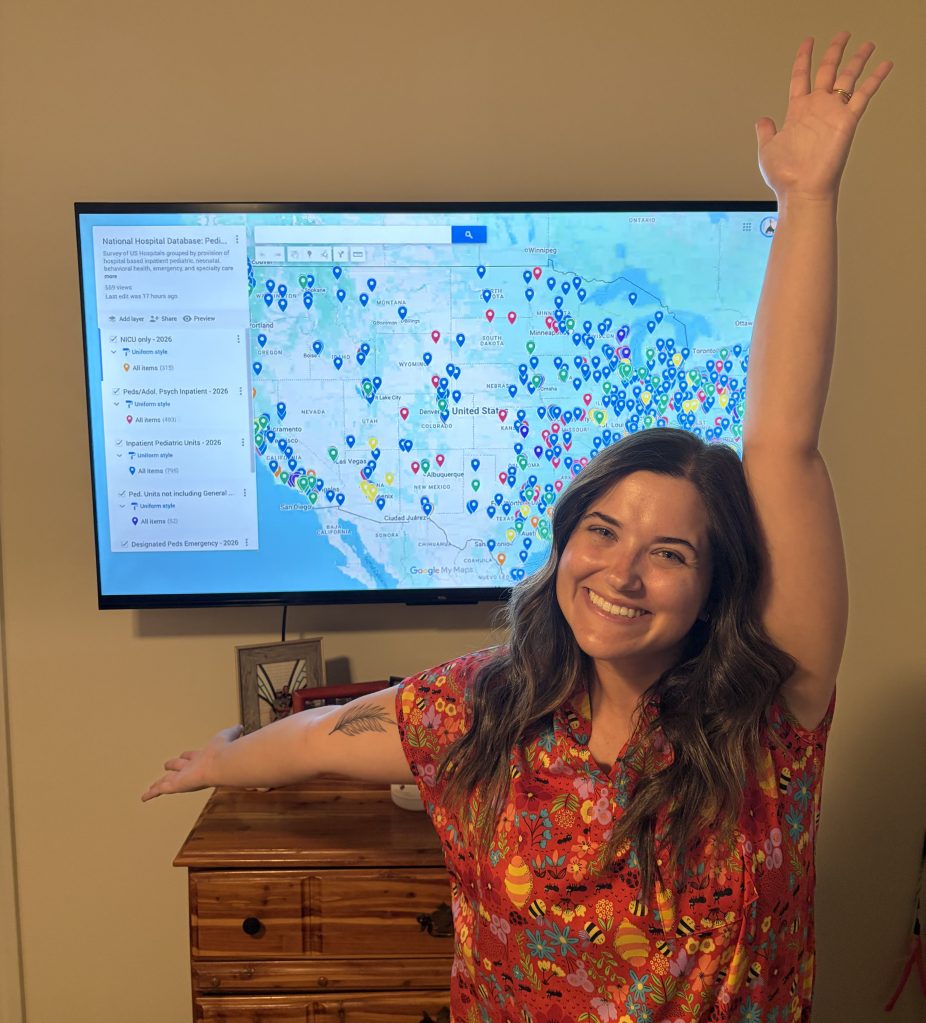
Pediatric, Neonatal, and Obstetric care database updates republished, 2024 – 2026
Seven years ago, 2019, this began with a question: if there was one level 4 NICU in my hometown, where were the other ones? I set out to find them, and more importantly to quantify and describe them, with the help of Google Sheets (free software, thanks Google!).
When I noticed some discrepancies a year later, I made another google sheet – the investigation became less of finding what I had missed, and blossomed into what is a maternal care desert and how can I understand the impact on prematurity?
A year after that, 2021, when I started nursing school and gained a deeper understanding of the impact of prematurity on the growth and development of a child, my orientation to obstetric, neonatal, and pediatric care shifted. If maternal care deserts exist, lack of prenatal care, education, and support exist. If advances in neonatal care make more and more saves possible, the children born of this age need accessible pediatric care. In an age where funding cuts are common, the community hospital is dying at the hands of private equity, and cash is king, where can a child receive care?
Which brings me to today, where I can proudly show you the culmination of seven years of work – the most detailed, up to date, and accessible research that I could accumulate. I’ve spent two long years at the keyboard erasing almost everything from previous publish, navigating openings and closures, merges and discoveries, into these databases and maps.
The statistics are astounding.
- 6,395 hospitals surveyed.
- 1,851 facilities providing inpatient or emergency pediatric specialty services
- 2,524 hospitals delivering babies
- 874 neonatal intensive care units
- 102 hospital closures (since last update)
- Over 1,600 major edits and updates, most often closure of labor and delivery units
I’m incredibly proud to say that I’m one of the people who work making it happen in my city, in my state. That I’m one of many people dedicated to child health and promotion of public health. In those 6,395, I am astounded by the number of people it takes to make hospitals, skilled nursing, inpatient psychiatry, and so much more possible.
There’s much to do, especially now in the disinformation and distrust age, to promote an INCREASE in care availability, instead of the rampant “consolidation of services” into a single location that leaves communities stranded with hours to drive to deliver their baby, to visit their sick child, to hold their preemie skin-to-skin.
102 closures is too many. Many of which came in communities that are rural or urban care deserts – Chicago, I’m looking at you.
So explore the data and form your own opinion on the revolution of care – increased specialists, increased radical treatment, decreased availability, increased corporate monopoly.
My opinion is that all of this data shows there is hope, we persist and we grow and change. Somewhere someone believes in the power of a child, an infant, and a mother.
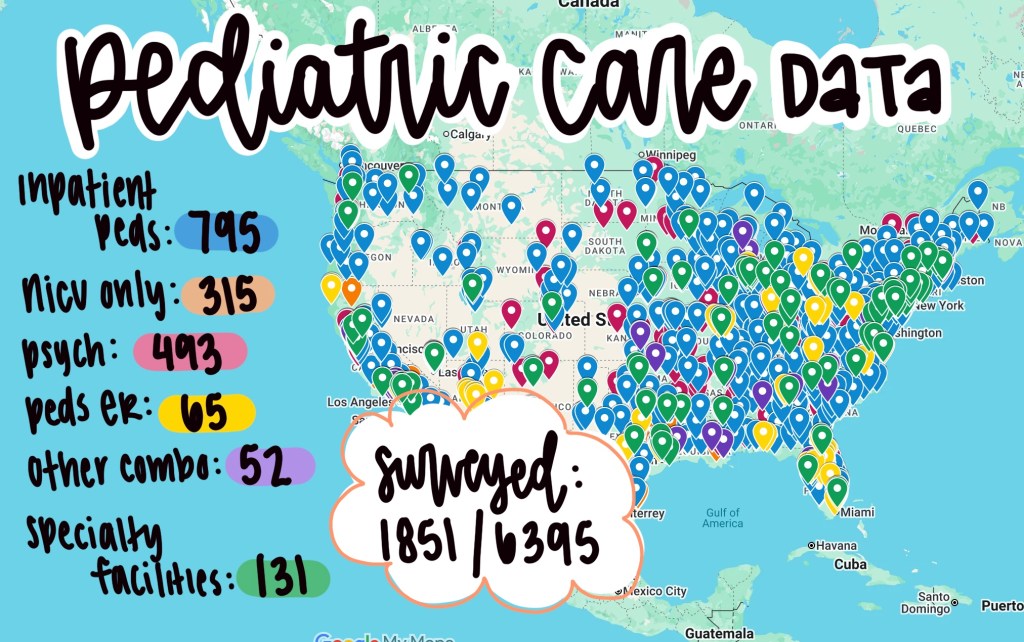
Note: This database acknowledges the provision of pediatric care by family physicians in mixed age units in small communities nationwide. To be included in Inpatient Pediatric care category, the facility must have self described a pediatric inpatient unit or pediatric beds staffed by a pediatrician or pediatric hospitalist.
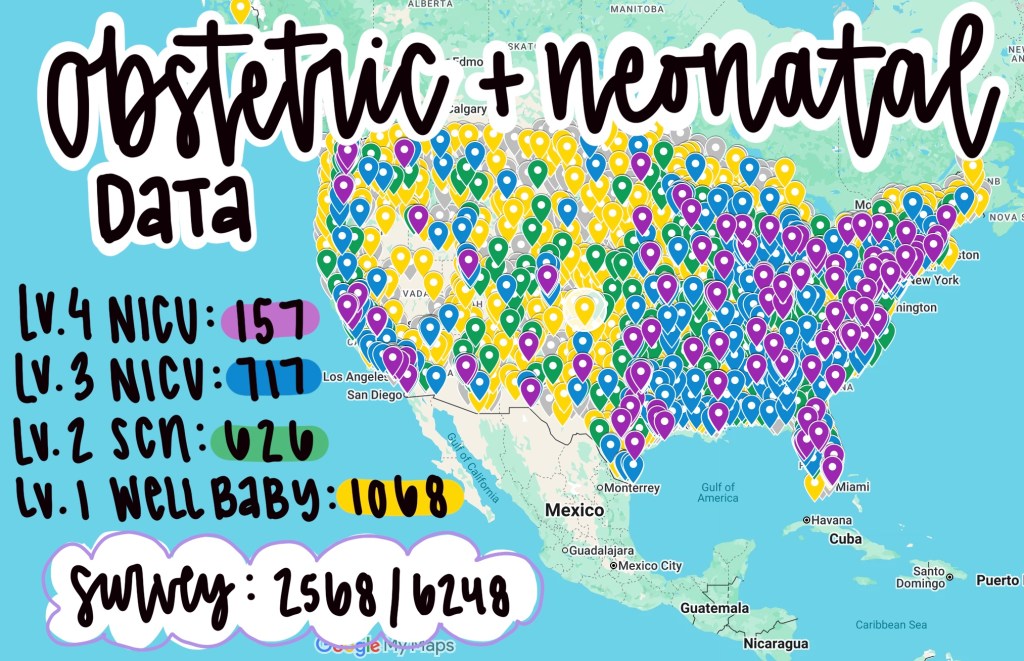
Note: This database does not include birthing centers.
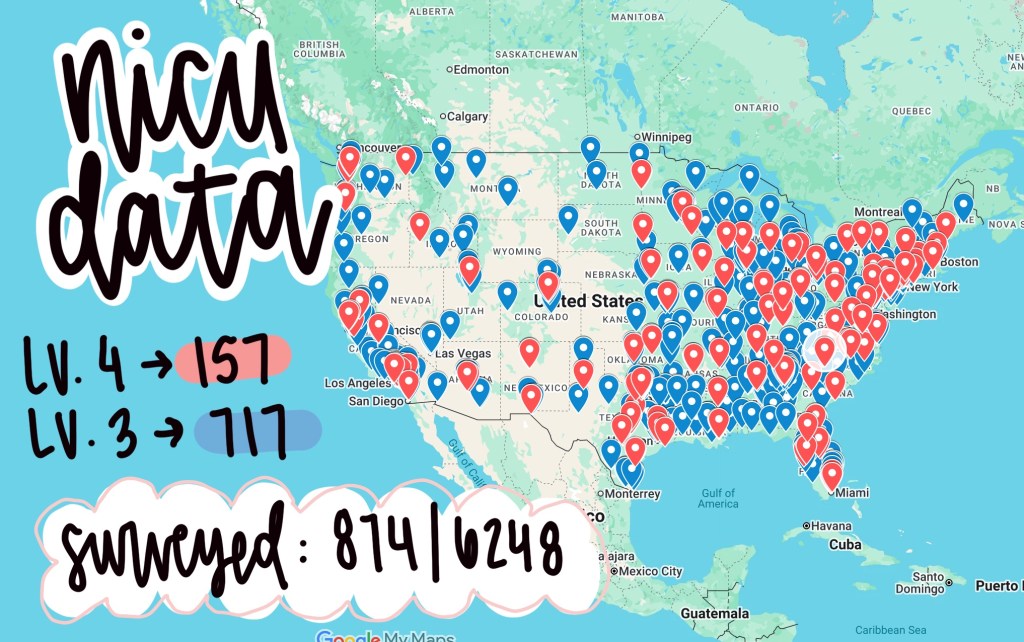
I’m not sure what the future looks like on For the Littlest, as my life changes and grows into something beyond my dreams, but if nothing else, this is a place for my carefully accumulated data to live in service of others.
I hope this helps you like it helps me.